

$18M School Closure Highlights Construction Insurance Risks
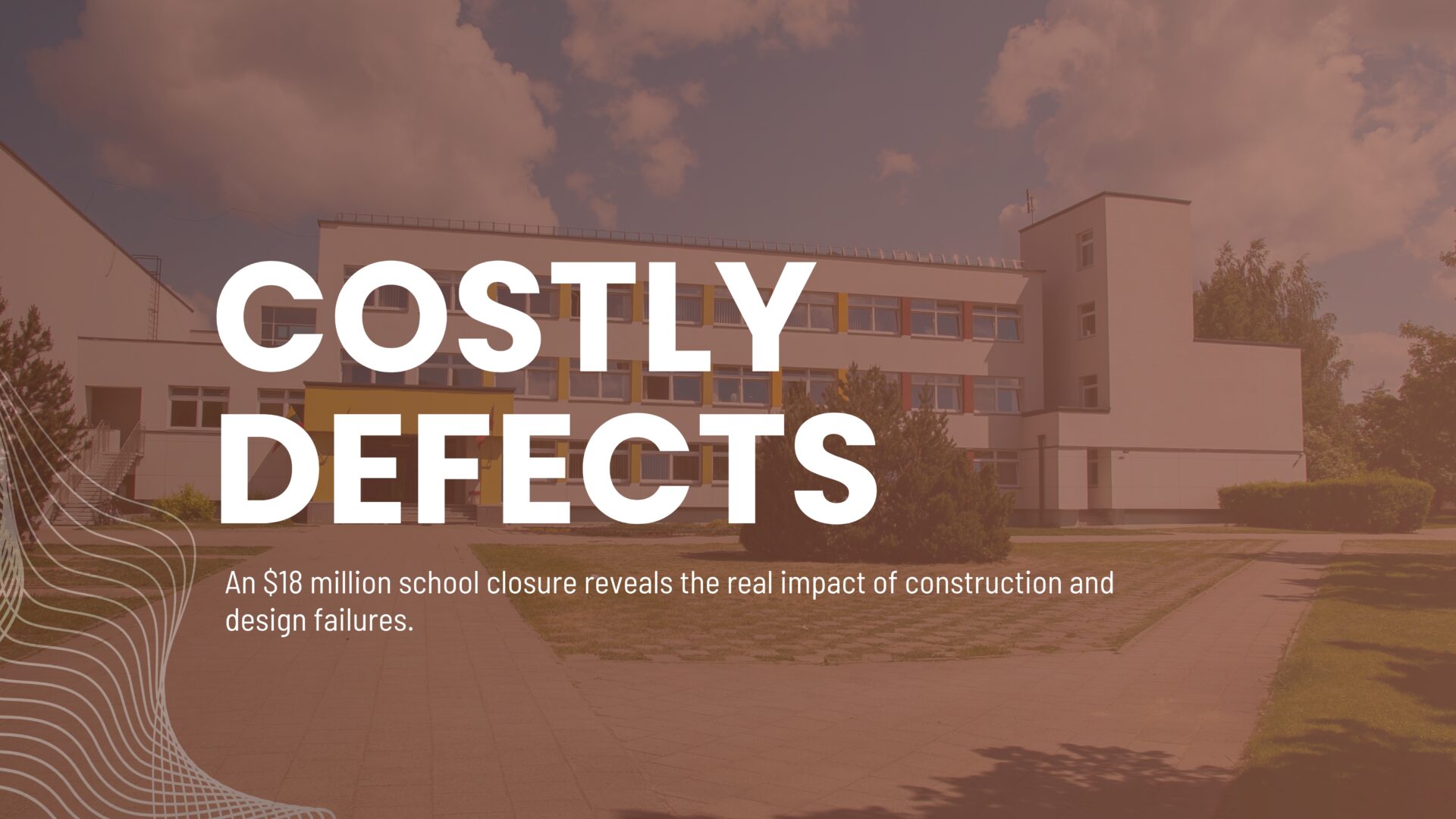
Construction insurance risks fall way ahead of just theory. They show up in real projects and have very real financial consequences. A recent case in the state of Washington shows just how fast things can go wrong. A newly built $18 million elementary school had to shut down shortly after opening. It was meant to serve over 500 students, but became unusable. The fallout is now turning into a complex legal battle.
What Went Wrong?
Shortly after its opening in 2021, problems started to appear almost immediately. There were reports of electrical shocks by the staff; furthermore, the gym started separating, water leaking through the roof, and other issues, like fire suppression systems were not properly installed. Such concerns are obviously not considered minor issues, but rather, they are serious safety concerns. Eventually, the school district had no choice but to close the building.
More than 500 students were relocated, which was sufficient to create operational chaos and unexpected costs. The district is now suing both the contractor and the architect. The contractor, however, has denied the claims and filed a countersuit. Situations like this are common when large construction defects surface.
Why Construction Insurance Risks Matter
One thing is proven through this case: construction insurance risks are a critical reality and can escalate quickly, even if the professionals believe they followed the plan. Multiple parties are involved in construction projects. Contractors, architects, and engineers all play their own separate roles. And that is why, when something fails, responsibility fails to be clear at first.
In such cases, legal costs can drain pockets. Once repair costs, delays, and reputational damage is added, the financial exposure can rise fast. Even well-managed projects can face disputes. That is why insurance is not optional. It is a core risk management tool.
The Hidden Cost of Design Errors
Design errors are one of the most expensive issues in construction, with industry data estimating them to cost billions globally each year.
In this case, the school was meant to be a prototype, and that automatically increases the risk. If a flaw exists in one design, it is likely to repeat across multiple buildings. The result is a multiplier effect, where one mistake can turn into several different claims.
For professionals, this is where construction insurance risks become long-term liabilities, not just one-time problems.
What Standard Policies Do Not Cover
Most of the time, professionals assume that a general liability policy is enough. Unfortunately, that is just a risky assumption.
Commercial General Liability (CGL) insurance typically covers third-party injury or property damage. For example, electrical shocks reported at the school may fall under this. However, CGL does not cover faulty workmanship or design flaws. That is where the gap in many claims arises. And it is exactly where risks can lead to financial destruction.
Why Professional Liability Insurance Is Critical
To prevent the gaps discussed in the earlier section, Errors and Omissions (E&O), also known as Professional Liability Insurance, is ideal. It covers financial losses caused by professional mistakes such as design errors, miscalculations, and failure to identify issues. For contractors and architects, this is crucial.
However, it is important to also note that not all policies are created equal, and coverage varies. Some include protection for subcontractor errors, others offer rectification coverage, which pays to fix a problem before it becomes a claim.
Understanding these details is key to managing construction insurance risks effectively.
Avoiding Coverage Gaps
Mostly, claims are not denied because of a lack of insurance, but because of significant gaps in coverage.
Some policies exclude faulty workmanship entirely, and others may limit coverage for design-related issues.
There are also enhancements that many professionals overlook:
- Rectification coverage to fix issues early
- Coverage for subcontractor liability
- Protection for reputational damage
- Coverage for withheld payments
Without these, a policy may not respond in the hour of need.
The Importance of Long-Term Protection
Think the liability is over once the project is completed? Wrong. Defects are likely to appear even years later, with lawsuits following long after the work is done. And if tail coverage, also known as an Extended Reporting Period, does not exist, claims may not be covered later. Unfortunately, many professionals cancel their policies once a project ends, creating serious exposure for themselves. This is one of the most overlooked risks in the industry.
Final Takeaway
The incident is nothing less than a clear warning. Even the slightest construction defects can entirely shut down projects, displace communities, and trigger costly legal battles. Having the right insurance strategy in place makes the difference between a manageable issue and a financial crisis.
