

NFIP vs Private Flood Insurance
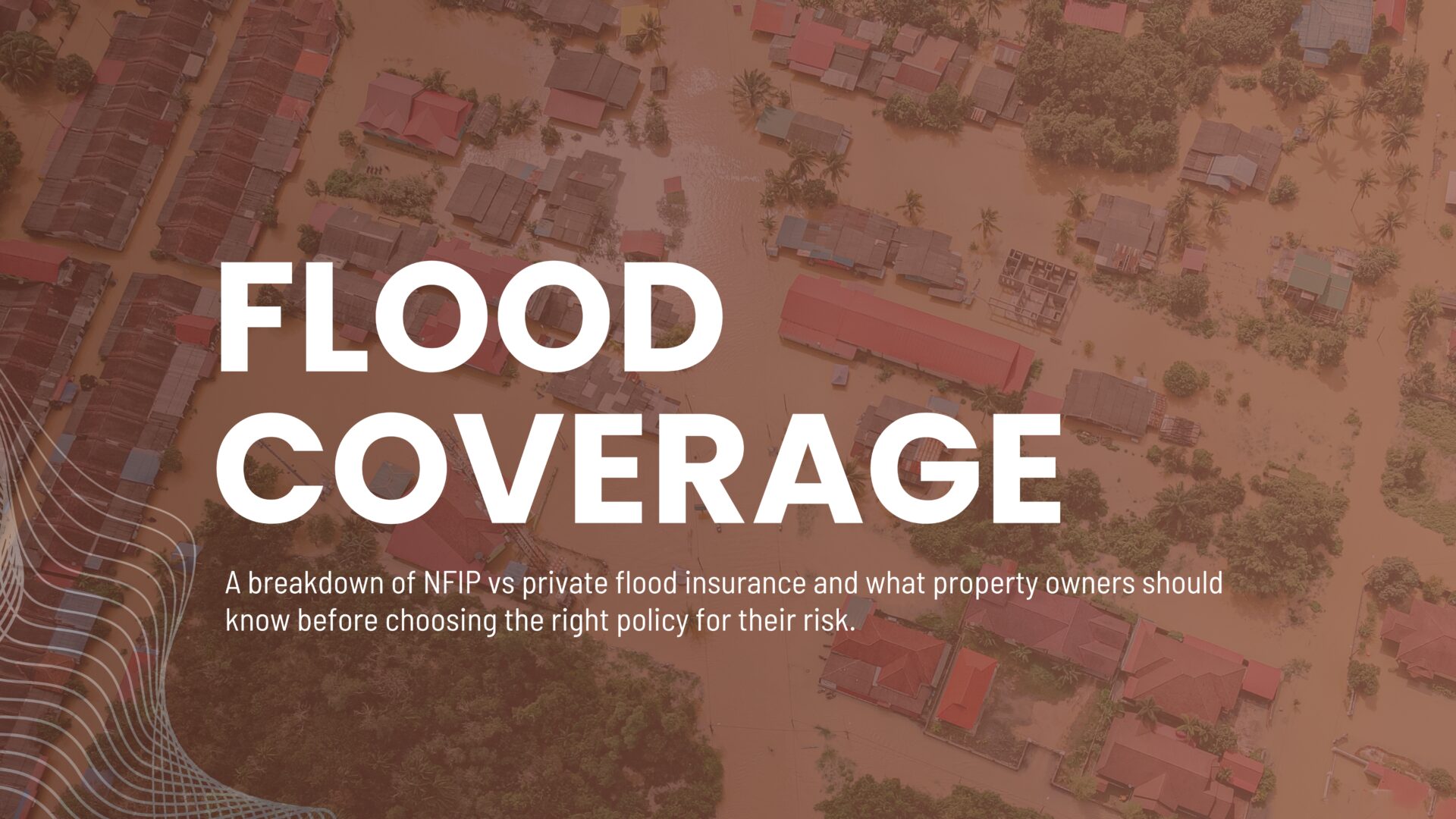
NFIP vs Private Flood Insurance: What Businesses and Homeowners Need to Know
For property owners, flood protection is essential. But it’s important to remember that not all flood insurance is the same. Homeowners and businesses have options through the National Flood Insurance Program (NFIP) or private insurance. Understanding the difference between the two can help property owners secure the right coverage for their needs.
Coverage Limits
NFIP:
- Standard NFIP residential policies provide $250,000 building coverage and $100,000 contents coverage.
- Optional coverages are limited, and waiting periods may apply before coverage is effective.
Private Insurance:
- Residential policies can cover up to $15,000,000 for buildings and $500,000 for contents, far exceeding NFIP limits.
- Commercial and RCBAP (condo) policies also provide high coverage limits with optional protections for pools, basements, landscaping, unattached structures, and rental income.
Additional Protections
With private flood insurance, there are often optional coverages which are not included in the NFIP, such as:
- Temporary living expenses if the property is uninhabitable
- Replacement cost on contents rather than actual cash value
- Basement and unattached structure coverage
- Pool repair and refill
- Loss of rental income
- Building betterments and improvements
NFIP policies are more limited in optional coverages and generally do not cover many of these additional risks.
Deductibles and Waiting Periods
- NFIP policies often require waiting periods (up to 30 days) and have lower coverage limits, making some claims slower or less comprehensive.
- Neptune Flood policies offer $0 deductible options for excess coverage and faster issuance, including immediate binding in many cases.
Digital Access and Ease of Use
Private insurance carriers often provide:
- Fully digital quoting and binding for residential, commercial, and RCBAP policies
- AI-powered systems for risk selection and pricing
- API integrations for agencies and e-commerce platforms to streamline sales
Making obtaining coverage faster and more user-friendly compared with NFIP’s traditional approach.
Who Should Consider Private Flood Insurance
- Homeowners or businesses seeking higher coverage limits than NFIP
- Properties with unique features, like pools, basements, or unattached structures
- Clients who want faster claims handling and digital convenience
- Investors or landlords who need loss of rental income coverage
Final Thoughts
While the NFIP remains an important option for federally-backed flood coverage, private flood insurance offers greater flexibility, higher coverage limits, additional protections, and faster digital access. Property owners should evaluate both options and work with an experienced agent to choose the best policy for their risk profile and coverage needs.
