

AI Impact on Workers’ Compensation Claims
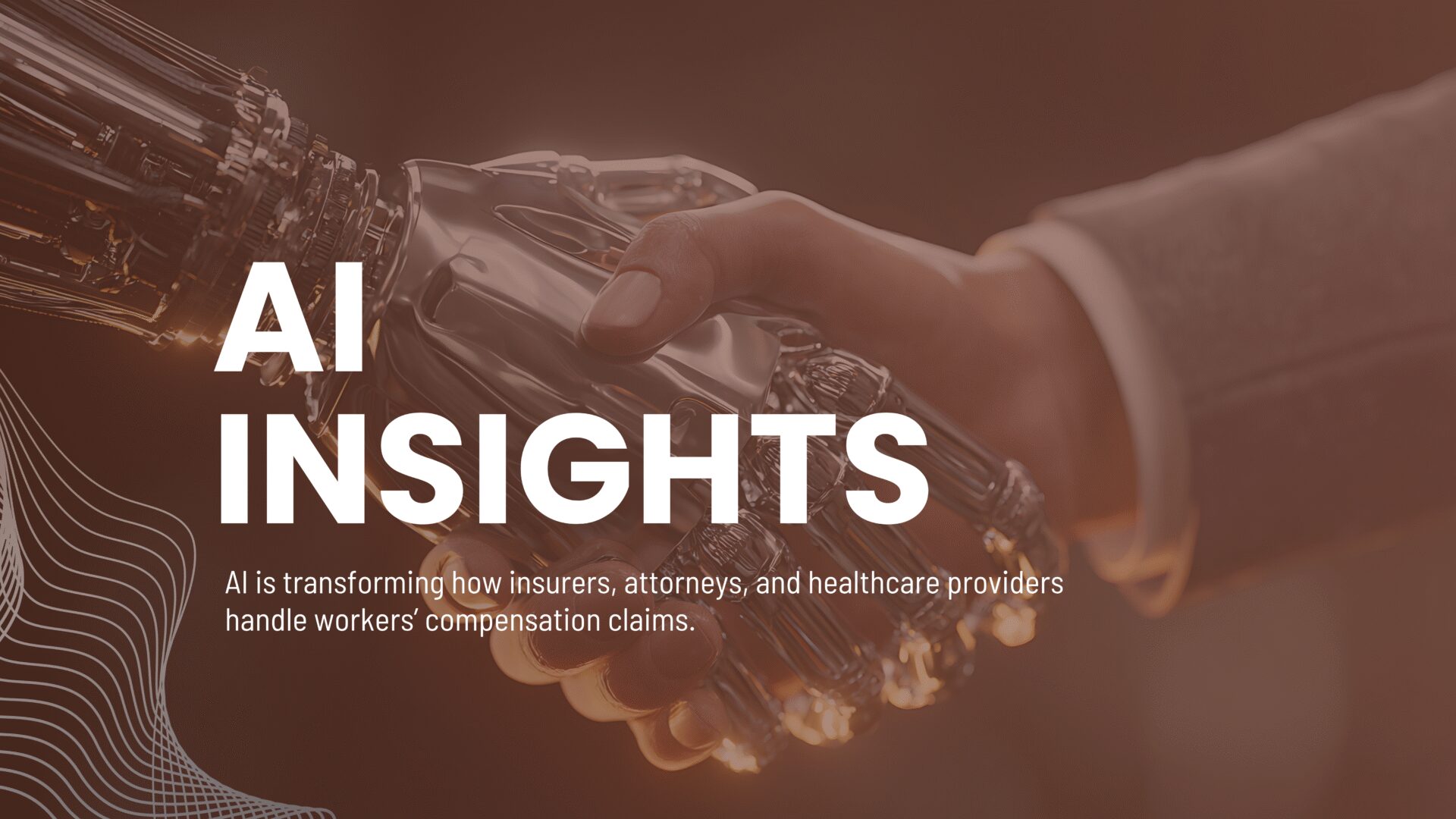
The use of AI in workers’ compensation claims is on the rise, which is making the entire claims process faster, more efficient, and data-driven. Artificial intelligence plays a significant role in how insurers, attorneys, and healthcare providers handle complex medical and legal issues, ultimately changing how workplace injuries are analyzed and resolved.
How AI Is Being Used in Workers’ Compensation
The usage of AI in workers’ compensation claims is expanding quickly. It is being used by insurance companies to automate underwriting, evaluate risk, and set policy terms more efficiently. Since AI can process large amounts of data, it can also identify risk factors faster than traditional methods, which reduces administrative burdens and processing times.
In claims management, AI assists with data entry, document categorization, and summarization. These tasks often consume significant time. Since workers’ comp cases are in a very high volume, automation allows professionals to focus on complex legal and medical issues rather than repetitive paperwork.
Lastly, AI also supports medical and legal evaluations by analyzing large sets of information and suggesting potential treatments or even estimating maximum medical improvement timelines. Overall, this helps improve the accuracy and speed of claim resolution.
Risk Management Benefits of AI in Workers’ Compensation Claims
The usage of AI in workers’ compensation claims is highly beneficial, especially with its ability to enhance risk management. AI is able to analyze unstructured data sources such as claim notes, photos, videos, and accident reports, and even detect trends or early indicators of workplace incidents. Insurers can then implement preventative measures to reduce future risks, helping businesses maintain safer environments and avoid costly claims.
Legal and Ethical Challenges of AI Use
While AI is making things much more convenient and efficient, it also introduces new legal and ethical challenges. Workers’ compensation claims often involve sensitive personal data like medical records and employment information, which must be protected at all costs. Therefore, all AI users must ensure compliance with privacy regulations such as HIPAA to prevent data breaches and misuse.
AI has two main structures: open systems, where data and code are publicly available, and closed systems, where access is restricted. Open systems can support legal research; however, sharing confidential client information in these tools is strictly prohibited. For claim processing or risk assessment, insurers and attorneys must use HIPAA-compliant, secure AI platforms.
Parameter control is another issue. AI learns from massive data inputs, and this can sometimes include irrelevant or biased information. This often leads to faulty decisions or inaccurate recommendations. Therefore, professionals must review AI-generated results critically rather than accepting them at face value.
Will AI Replace Human Jobs?
A very common concern these days is whether AI will replace human workers and take over their jobs. The answer is, while AI can improve efficiency, it cannot replace the human brain’s excellence or judgment. Medical experts, attorneys, and insurers still play crucial roles in interpreting data, strategizing cases, and making ethical decisions.
AI is more of a valuable partner than a replacement for highly experienced professionals. It assists in automating routine tasks, reducing administrative strain, and allowing experts to focus on higher-level analysis and decision-making.
The Future of AI in Workers’ Compensation
With technological advancement, AI’s influence on workers’ compensation will continue to grow. As insurers and legal professionals refine compliance frameworks and establish ethical standards, AI will likely become an integral part of claims management.
However, success lies in maintaining a careful balance between automation and the human touch, ensuring efficiency doesn’t come at the expense of fairness, accuracy, or privacy.
